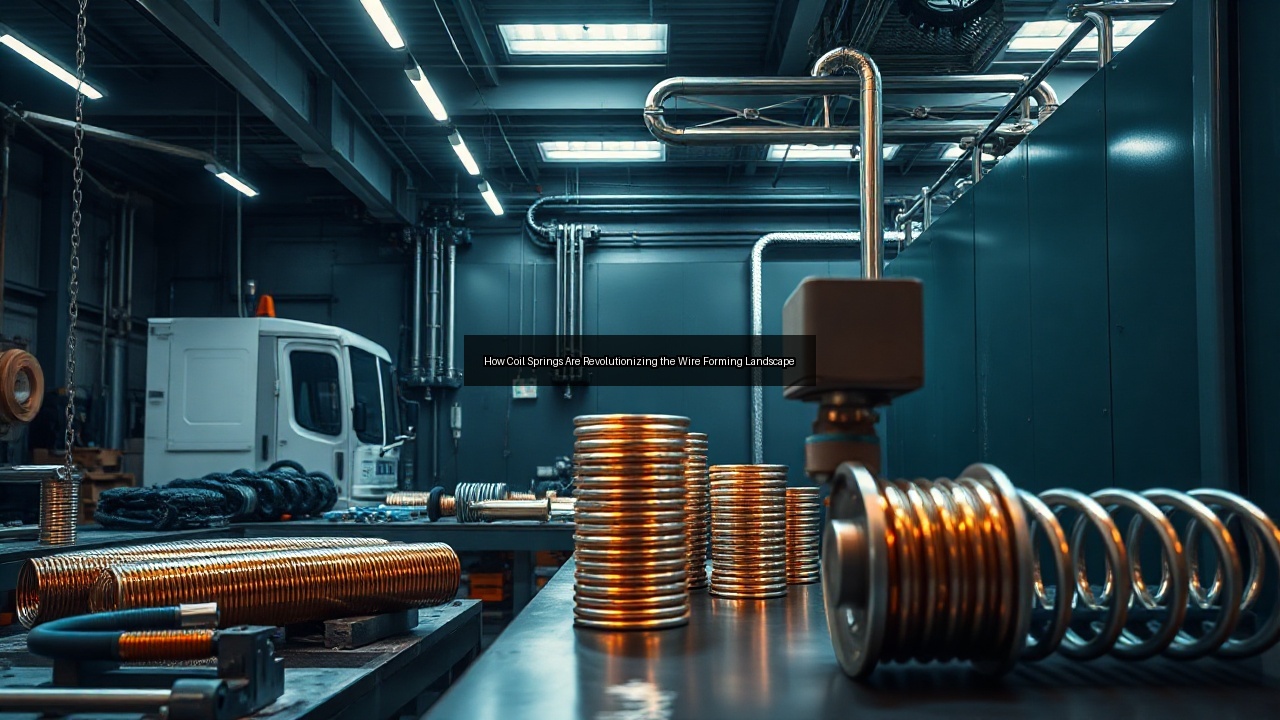
How Coil Springs Are Revolutionizing the Wire Forming Landscape
The Evolution of Wire Forming Techniques
Traditional Methods vs. Modern Innovations
Wire forming has undergone significant transformations, evolving from rudimentary techniques to sophisticated methods powered by advanced technology. Traditional wire forming processes often relied on manual labor and basic machines, limiting production capabilities and precision. Blacksmiths and artisans shaped wires using hammers and anvils, creating unique forms but lacking uniformity. As industries grew, the demand for consistency and efficiency led to innovations in wire forming methods.
Modern wire forming techniques leverage advanced machinery and automation, allowing for mass production without sacrificing quality. Today, processes such as CNC (Computer Numerical Control) machining have revolutionized the landscape, enabling precise control over wire shaping and forming. The integration of computer technology in wire forming has streamlined operations, reduced waste, and improved the overall quality of wire forms. Innovations like these have paved the way for incorporating coil springs into wire forming processes, enhancing performance and versatility.
The Role of Coil Springs in Wire Forming
Coil springs play a pivotal role in modern wire forming, offering unique advantages that traditional methods cannot match. These springs, crafted from high-quality wires, provide flexibility, strength, and resilience. In various applications, coil springs ensure that products operate smoothly under stress, maintaining their shape and functionality over time. Their design allows for energy storage and release, making them essential components in machinery, vehicles, and consumer products.
In wire forming, coil springs enhance the capability to produce intricate shapes and designs. The ability to manipulate the diameter of the coil spring directly impacts its performance and functionality. Manufacturers can create springs that meet specific engineering requirements, ensuring that they fit seamlessly into various systems. This adaptability makes coil springs a staple in industries ranging from automotive to aerospace, where precision and reliability are paramount.
Advantages of Using Stainless Steel in Wire Forms
Stainless steel has emerged as a preferred material in wire forming due to its exceptional properties. This alloy resists corrosion, maintains strength at high temperatures, and provides durability in challenging environments. As a result, wire forms made from stainless steel exhibit longevity and reliability, crucial for applications in diverse sectors, including aerospace, automotive, and medical devices.
Using stainless steel in wire forming also allows for a range of finishing options, enhancing product aesthetics and functionality. Whether through polishing, coating, or drawing, manufacturers can achieve desired surface qualities that meet specific industry standards. The adaptability of stainless steel further extends to the wire forming processes, enabling the production of customized wire shapes and sizes tailored to unique applications. Its strength and resistance to wear make stainless steel an ideal choice for coil springs, ensuring they withstand repeated stress and maintain their integrity over time.
Understanding the Coil Spring Advantage
Impact of Diameter on Coil Spring Performance
The diameter of coil springs directly influences their performance and suitability for various applications. A thicker diameter typically enhances strength and load-bearing capacity, while a thinner diameter offers increased flexibility. Engineers must carefully consider these factors when designing coil springs for specific uses, balancing strength and deflection to meet operational requirements.
In applications where space is limited, smaller diameter coil springs can be advantageous, providing the necessary force without occupying excessive room. Conversely, larger diameter springs may be ideal for heavy-duty applications, where durability and load management are critical. Understanding the relationship between diameter and performance is essential for manufacturers and engineers, allowing them to optimize designs for efficiency and effectiveness.
This knowledge extends to the wire forming process, as the diameter affects the ability to shape and manipulate the wire. Manufacturers can use advanced machines to create precise coil shapes, ensuring that the final product meets stringent specifications. The ability to control diameter and other parameters during production enhances the overall quality of wire formed components, resulting in superior performance in their intended applications.
Precision Engineering and Tolerances in Coil Springs
Precision engineering plays a crucial role in the production of coil springs, where tolerances dictate the performance and functionality of the final product. Tolerances refer to the allowable variations in dimensions during manufacturing, and maintaining these specifications is vital for ensuring that coil springs operate as intended in their applications.
High-precision machines and sophisticated techniques allow manufacturers to achieve tight tolerances, which enhance the reliability of coil springs in various environments. Engineers can specify exact measurements for coil diameter, length, and pitch, ensuring that each spring meets rigorous performance standards. This precision becomes particularly important in industries like aerospace, where even minor deviations can lead to significant operational issues.
Moreover, the integration of CNC technology in coil spring manufacturing has further improved precision. CNC machines can execute complex designs with remarkable accuracy, producing wire forms that meet exact specifications. This capability not only enhances product quality but also supports rapid prototyping, allowing companies to test new designs and iterate quickly in response to market demands.
Computer Numerical Control (CNC) in Coil Spring Manufacturing
CNC technology has transformed coil spring manufacturing, providing unprecedented precision and efficiency. CNC machines utilize computer programs to control the movement and operation of machinery, allowing for intricate shapes and forms to be produced with minimal human intervention. This automation reduces the likelihood of errors and enhances the wire formed overall quality of the wire forms produced.
The application of CNC in coil springs enables manufacturers to create complex geometries that were once impossible with traditional methods. This technology supports the production of custom wire shapes, accommodating specific engineering requirements for various industries. As a result, businesses can respond to customer demands for unique designs without compromising quality or increasing lead times.
CNC machining also facilitates rapid prototyping, allowing engineers to develop and test new coil spring designs quickly. The ability to adjust parameters digitally streamlines the process, enabling manufacturers to iterate designs efficiently. This innovation has positioned CNC technology as a cornerstone of modern wire forming, ensuring that coil springs continue to evolve alongside industry needs.
Applications of Coil Springs in Various Industries
Aerospace Industry Demands and Wire Forming
The aerospace industry presents unique challenges for wire forming, demanding components that meet strict safety and performance standards. Coil springs play a critical role in this sector, providing essential functions in various applications, from landing gears to control systems. Engineers rely on the strength and reliability of wire forming capabilities coil springs to ensure that aircraft operate safely and effectively under extreme conditions.
In aerospace applications, the choice of materials and manufacturing processes significantly impacts performance. Lightweight yet durable materials like stainless steel are preferred for coil springs, as they minimize weight while maintaining strength. The rigorous testing and quality assurance processes required in aerospace further emphasize the importance of precision engineering in wire forming.
Advanced wire forming techniques, such as CNC machining, enable the production of coil springs that meet the precise specifications needed for aerospace components. With the ability to customize designs and adhere to strict tolerances, manufacturers can deliver high-quality wire forms that contribute to the safety and efficiency of modern aircraft.
Prototyping and Custom Wire Shapes
Prototyping has become an integral part of product development across various industries, and coil springs are no exception. Manufacturers use advanced wire forming techniques to create custom wire shapes tailored to specific applications. This flexibility allows companies to test and refine designs quickly, reducing time to market and improving overall product quality.
Custom wire shapes can accommodate unique engineering requirements, ensuring that products perform optimally under various conditions. The ability to manipulate wire diameter, coil design, and material choice enables engineers to push the boundaries of innovation. Rapid prototyping through CNC technology allows for quick iterations, enabling manufacturers to respond swiftly to market demands and customer feedback.
This process significantly enhances the development cycle, allowing businesses to explore new ideas without the constraints of traditional manufacturing methods. As industries continue to evolve, the demand for custom wire forms is likely to increase, positioning coil springs as essential components in the design and manufacturing landscape.
Exploring Wire Forming Processes Across Different Sectors
The versatility of wire forming processes extends across various sectors, highlighting the adaptability of coil springs in meeting diverse needs. From automotive to medical devices, wire forming plays a crucial role in ensuring that products function effectively and reliably. Each industry presents unique challenges, but the fundamental principles of wire forming remain consistent.
In the automotive sector, coil springs are vital for suspension systems, providing stability and comfort in vehicles. The demand for high-performance components drives innovation in wire forming processes, ensuring that manufacturers can produce parts that meet rigorous safety and performance standards.
Similarly, in the medical field, coil springs contribute to the functionality of devices such as surgical instruments and diagnostic equipment. Precision and reliability are paramount, and wire forming techniques must adapt to meet these stringent requirements.
Overall, the exploration of wire forming processes across different industries demonstrates the significant role coil springs play in modern manufacturing. As technology advances and industries evolve, wire forming will continue to adapt, offering innovative solutions and enhancing product performance across the board.
See Also
- The Science Behind Wire Forming and Its Role in Aerospace Engineering
- Inside Wire Forming Services A Deep Dive into Capabilities and Offerings
- From Drawing to Creation Understanding the Wire Forming Process
- Designing with Wire Forming Understanding Material Properties and Performance
- Innovative Wire Forming Techniques for Aerospace Applications